 Skip to content


Animal acupuncture
in Montpellier
until January, 2027.
Thank you for your understanding!
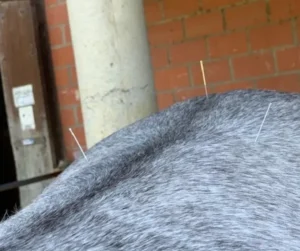
Animal acupuncture is a discipline derived from Traditional Chinese Medicine (TCM), integrated today into modern veterinary medicine as a complementary approach to managing pain, musculoskeletal, and visceral disorders. It relies on the stimulation of specific points on the body using thin needles to restore functional balance, relieve pain, and support the body’s natural capacity for adaptation and self-healing.
Used in combination with other approaches such as osteopathy, acupuncture allows for a holistic approach to health in dogs, cats, exotic pets (pocket pets), and horses.
What are the indications for animal acupuncture?
Thanks to its analgesic (releasing natural endorphins), anti-inflammatory, and nervous system-regulating effects, acupuncture supports a wide range of clinical conditions in both young and senior animals.
Musculoskeletal and neurological disorders
Pain management
Osteoarthritis and musculoskeletal disorders
Support for senior animals
Aiding recovery in cases of herniated discs
Epilepsy

Visceral conditions
Digestive disorders (gastritis, vomiting, diarrhea, constipation)
Chronic kidney disease
Urinary issues (idiopathic cystitis, urinary incontinence…)
Respiratory conditions (emphysema, asthma…)
Anxiety and stress regulation

How an acupuncture session works?
An acupuncture treatment is performed during an osteopathy consultation to provide comprehensive, holistic care for the animal.
Medical history gathering
The veterinarian will begin by asking you several questions to understand the origin of the problem (onset conditions, time of day, frequency, etc.).


Clinical evaluation
The veterinarian will then examine your animal to evaluate the different meridians and identify points that have an energy deficiency or excess.
Acupuncture treatment
Stimulation of specific acupuncture points using thin needles, either to tonify the meridian (in case of energy deficiency) or to promote energy circulation (disperse in case of excess). The needles remain in place until they fall out naturally, which marks the end of their action.

How to prepare for your animal's acupuncture consultation?
Preparing for the consultation improves treatment efficacy and ensures a positive experience for your pet. It also allows the veterinarian to work more efficiently and provide care tailored to your animal’s specific needs.
Before the consultation
Medical history: Prepare a list of your animal’s medical history, including recent and ongoing treatments, as well as any pre-existing health conditions.
Symptom observation: Note the frequency and intensity of your animal’s symptoms, and take a video if possible (especially in cases of intermittent symptoms).
On the day of the consultation
Feeding: Avoid feeding your animal right before the session. It is best to feed them at least two hours beforehand to prevent digestive discomfort during manipulation.
Walk and bathroom break: For dogs, take a short walk before the session so they can relax and relieve themselves. This helps reduce stress and discomfort.
Peace and quiet: Limit interactions with other animals that might agitate yours, and try to maintain a calming environment before the session. Avoid stressful activities for your animal—and for yourself too! If your animal senses you are stressed, they will be too.
Keep the osteopath informed: Share any recent changes in your animal’s health, behavior, or previous reactions to physical manipulation.
Post-consultation guidelines
Immediately after: taking a few precautions after a session is crucial to maximize the benefits of the treatment:
Rest and quiet: Let your animal rest in a calm and peaceful environment. Avoid intense physical activities, such as running or jumping, for at least 48 hours.
Hydration: Ensure your animal has access to plenty of fresh water.
Please note: It is common for your animal to feel tired, experience a temporary loss of appetite, and/or have loose stools. These are normal and frequent symptoms that should resolve within 48 hours.
Frequently asked questions about acupuncture
Before scheduling a consultation, it is natural to have questions. Let’s look at the most common ones!
Is acupuncture painful for my animal?
The needles are generally well tolerated, and the session takes place in a calm atmosphere, respecting the animal’s own pace. A brief reaction of surprise is sometimes observed with the first needle, followed by deep relaxation,it is not uncommon for the animal to fall asleep during the session (which lasts about 15 to 20 minutes).
For highly sensitive animals or “ticklish” horses, therapeutic laser can be used on the acupuncture points, which is completely painless.
How many sessions are needed before seeing results?
This depends on the pathology:
Acute pathology (e.g., stiff neck, sudden digestive upset): An improvement can often be seen within 1 to 2 sessions.
Chronic pathology (e.g., long-standing osteoarthritis, kidney failure): It usually takes 3 to 4 sessions (spaced 1 to 2 weeks apart) to stabilize the animal. Once results are achieved, “maintenance” sessions at the change of each season are often necessary.
Are there any side effects or contraindications?
Acupuncture is one of the safest therapies available. Side effects are rare and mild, typically consisting of slight fatigue for 24 hours or a minor area of sensitivity at the insertion point.
However, it must be practiced with caution in certain cases: on tumor sites, in pregnant females (as some points can stimulate contractions), and in animals with severe bleeding disorders.
Can acupuncture replace my veterinarian's treatment?
Acupuncture is a complementary medicine, not an alternative one. It does not replace a necessary surgery (e.g., for a fracture) or antibiotics for an infection.
On the other hand, it very often makes it possible to reduce drug dosages (such as anti-inflammatories or painkillers), which is highly valuable for protecting the animal’s stomach and kidneys over the long term.
Contact form
If you have any other questions about acupuncture for your animal or would like more information before booking an appointment, please feel free to contact me. I will do my best to get back to you as soon as possible.