 Skip to content


Rehabilitation for Dogs and Cats
in Montpellier
until January, 2027.
Thank you for your understanding!
Rehabilitation, also known as physiotherapy, has established itself as an essential discipline in veterinary medicine for motor recovery and pain management in dogs and cats.
By combining manual techniques (massage, mobilization), targeted exercises, and dedicated tools (heat or cold therapy, laser, or electrotherapy), it promotes tissue healing, and improves mobility.
What are the indications for rehabilitation?
By strengthening muscle mass and joint range of motion, and reducing inflammation, rehabilitation supports the care of animals in many situations:
Orthopedic conditions and pain
- Osteoarthritis,
- Support for senior animals (muscle atrophy, joint stiffness),
- Sprains, tendinitis,
- Chronic pain management,
Rehabilitation after surgery
- Cruciate ligament rupture,
- Hip, shoulder, or elbow dysplasia,
- Fractures,
- Patellar luxations...
Neurological recovery
- Disc herniations,
- Trauma,
- Degenerative myelopathy...
Prevention
- For sporting animals: muscle strengthening and injury prevention,
- For overweight or obese animals: supporting weight loss through controlled exercise, alongside a suitable diet,
- For predisposed breeds: hip dysplasia in Labradors or Golden Retrievers, disc herniation in Dachshunds or Bulldogs, degenerative myelopathy in German Shepherds...
What to expect during a rehabilitation consultation?
During the first session, which generally lasts 30 to 45 minutes, each animal receives a personalized functional assessment, allowing the most suitable protocol to be defined based on their age and condition.
Initial assessment and pain evaluation
Gait analysis, measurement of joint range of motion and muscle mass. Sensitive areas are identified and precisely evaluated to tailor the intensity of treatment.


Personalized rehabilitation program
Development of a personalized rehabilitation program combining one or more techniques (massage, active exercises, heat or cold therapy, and specialized equipment).
At-home care program
Guidance on a list of simple exercises you can do with your pet at home to extend the benefits of the session.
Rehabilitation techniques used
- Massage and passive mobilization: manual techniques aimed at relaxing muscles, mobilizing joints, and reducing painful tension.
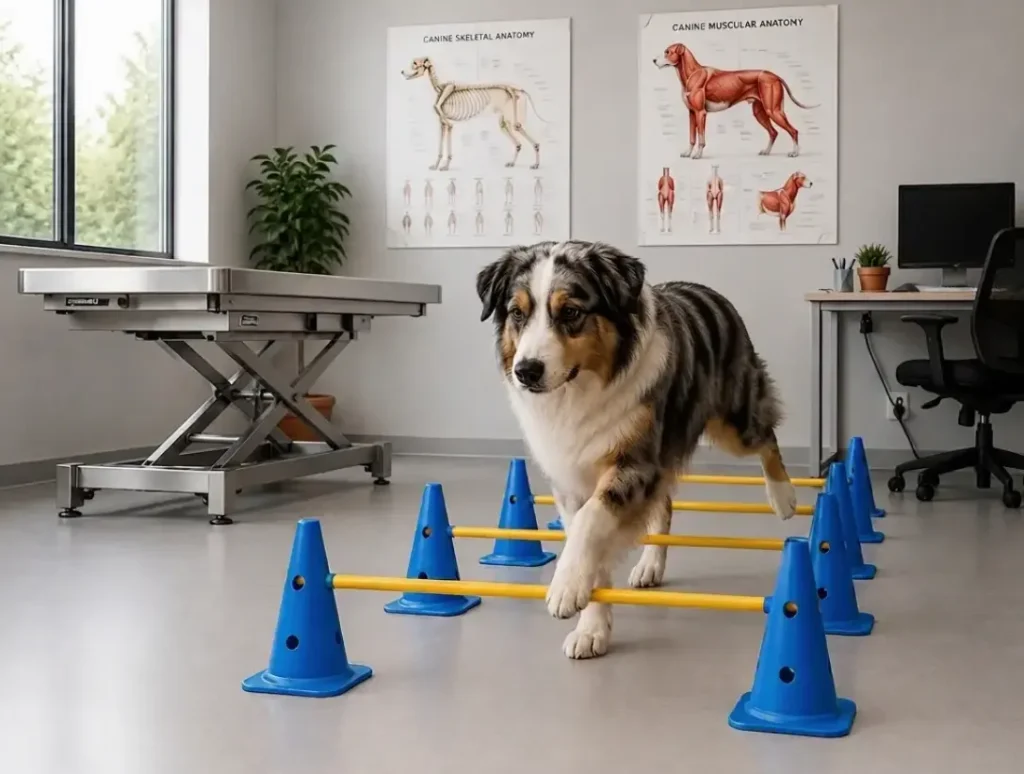
- Active exercises: activities to improve coordination and balance and to strengthen musculature (cavalettis, bosu balls, obstacle courses…).
- Heat and cold therapy: heat to improve tissue flexibility and promote muscle relaxation, or cold to relieve pain and limit inflammation.
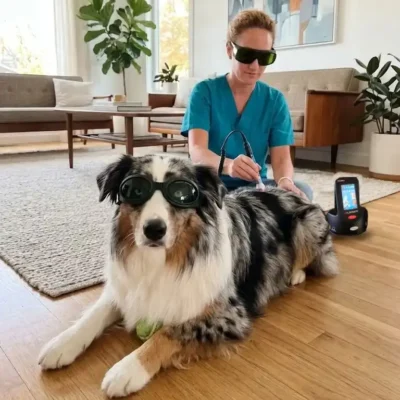
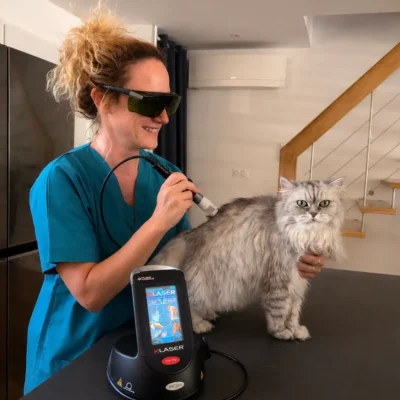
- Laser therapy: a technique using infrared light for its anti-inflammatory, analgesic, and microcirculation-stimulating effects on cellular repair. It helps reduce pain and speed up healing in cases of osteoarthritis, tendinitis, sprains, wounds…
- iMoove Vet : a motorized platform using gentle 3D movements to stimulate proprioception, joint mobility, and deep core muscle strengthening.
- Electrotherapy: the use of low-intensity electrical currents to stimulate muscles, improve neuromuscular function, and support recovery.
How to prepare for your animal's rehabilitation consultation?
Before the session
- Medical records: Bring recent surgical reports, X-rays, or neurological exam results.
- Symptom observation: Note the frequency and intensity of your pet’s symptoms, and film them if possible, especially for intermittent symptoms.
- Motivation: Identify what your pet likes best (specific treats, favorite toy) — these will be used to encourage them.

On the day of the consultation
- Feeding: Your pet should not be in the middle of digesting a meal, especially if physical exercises are planned. A light meal 2–3 hours beforehand is ideal.
- Hygiene: Make sure your pet has relieved themselves. A clean animal (dry coat, no mud) makes massage and electrotherapy techniques easier when needed.
- State of mind: Rehabilitation requires cooperation. A calm environment before the appointment will help your pet stay focused and attentive.
Frequently asked questions about rehabilitation for Dogs and Cats
Before your consultation, it’s completely normal to have a few questions. Let’s go over the most common ones together!
Which animals can benefit from veterinary rehabilitation?
Veterinary rehabilitation is primarily for dogs and cats, at any stage of life. It can be recommended for young, adult, senior, or sporting animals – whether after surgery or simply to maintain and improve physical condition.
My pet has just had surgery. When should rehabilitation start?
As early as possible, within the days following the procedure. Waiting until your animal “feels better” means losing ground: an unused muscle loses around 0.5 % of its mass per day — close to a third within five weeks — and the joint stiffens just as quickly.
Starting early does not mean exercising early. The first few days are devoted to relieving pain and preserving what is already there: cryotherapy, laser, massage and very gentle passive mobilisations. Next comes gradual reloading of the limb, and only then active strengthening exercises.
How it works in practice
- Phase 1, the first few days — relieve. Cryotherapy over the surgical site, laser for inflammation and healing, massage away from the wound, very gentle passive mobilisations. No effort is asked of your animal.
- Phase 2 — restore weight-bearing. Gradual reloading of the limb, postural work, short balance exercices. It is weight-bearing that rebuilds muscle and remineralises bone.
- Phase 3 — rebuild. Active work, strengthening, coordination, then a return to normal or sporting activity.
After cruciate ligament surgery, a slipped disc or a fracture, do get in touch without delay.
Is rehabilitation painful for my pet?
The techniques used are tailored to each animal and carried out with their comfort in mind. Sessions are not painful — on the contrary, they aim to relieve pain and improve overall well-being.
How many rehabilitation sessions are needed?
The number of sessions depends on the condition being treated, the animal’s age, and the goals of the treatment plan. A personalized care plan is proposed after the initial assessment and may be adjusted based on the progress observed.
Are there any complementary treatments recommended alongside rehabilitation?
It’s important for the animal to receive a balanced diet in the right quantity. This is especially important in cases of muscle and joint conditions, so that the animal stays at a healthy weight and doesn’t place additional strain on their joints.
What are the long-term benefits of rehabilitation?
Rehabilitation helps improve mobility, reduce pain, and maintain functional abilities over the long term. It contributes to a better quality of life and can help prevent the development of compensatory issues or recurrences.
Contact form
If you have any other questions about rehabilitation for your pet, or would like more information before booking an appointment, please don’t hesitate to contact me — I’ll do my best to get back to you as soon as possible.