 Skip to content

Veterinary Rehabilitation, Osteopathy and Acupuncture in Montpellier and surrounding areas

until January, 2027.
Thank you for your understanding!
For your animal's vitality, at home and with a gentle touch
Veterinary rehabilitation, osteopathy, and acupuncture aim to restore mobility, relieve pain, and improve the quality of life of animals (dogs, cats, horses, rabbits…). These approaches are complementary: osteopathy and acupuncture release osteoarticular and visceral blockages, and rehabilitation strengthens the musculoskeletal system sustainably.
Rehabilitation (dog and cat)
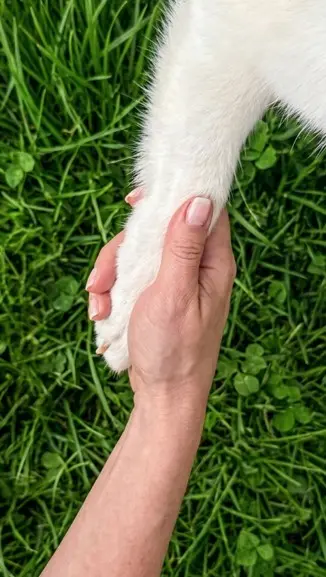
Veterinary rehabilitation, also known as physiotherapy, combines a range of techniques (massages, mobilisations, exercises) and devices (laser, iMoove Vet, electrotherapy…) designed to strengthen or restore the mobility of your dog and cat after a surgery or mobility issues.
Each animal benefits from a personalized rehabilitation program, tailored to their age, specific condition, and pain level, ensuring an optimal and stress-free motor recovery.
Osteopathy (dog, cat, exotic pets and horse)
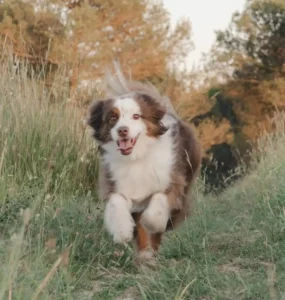
Veterinary osteopathy is a form of alternative medicine aimed at restoring the normal balance and functioning of the body in dogs, cats, and horses. Through targeted manipulations of the muscles, joints, and internal organs (visceral), it helps relieve tension, improve comfort, and promote their well-being.
Complementary to traditional veterinary medicine, it plays a key role in the management of chronic diseases, often allowing for a reduction in daily medication use, reserving it for flare-ups.
Acupuncture (dog, cat, exotic pets and horses)
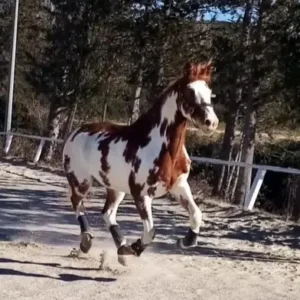
Stemming from traditional Chinese medicine, veterinary acupuncture focuses on a holistic approach to the patient rather than simply treating symptoms. By rebalancing the flow of Qi (vital energy), it stimulates the body’s self-healing capacities.
A true pillar of prevention, it works in perfect synergy with classic veterinary care to maintain the animal’s good health over the long term.
Indications
Musculoskeletal problems
- Orthopedic conditions: osteoarthritis, tendinitis, sprains, dysplasia
- Post-surgical rehabilitation: cruciate ligament rupture, herniated disc, fractures...
- Pain management
Chronic visceral problems
- Chronic digestive disorders (vomiting, gastritis, diarrhea...)
- Urinary and renal disorders (kidney failure, idiopathic cystitis...)
- Respiratory conditions (emphysema, asthma...)
- Help in regulating anxiety and stress
Preventive care
- Muscle strengthening for athletic animals
- Muscle support for senior animals
- Overweight/Obesity
- Breeds predisposed to osteoarticular disorders (Labrador, Golden Retriever, German Shepherd, Dachshund, Bulldog...)
Who am I?
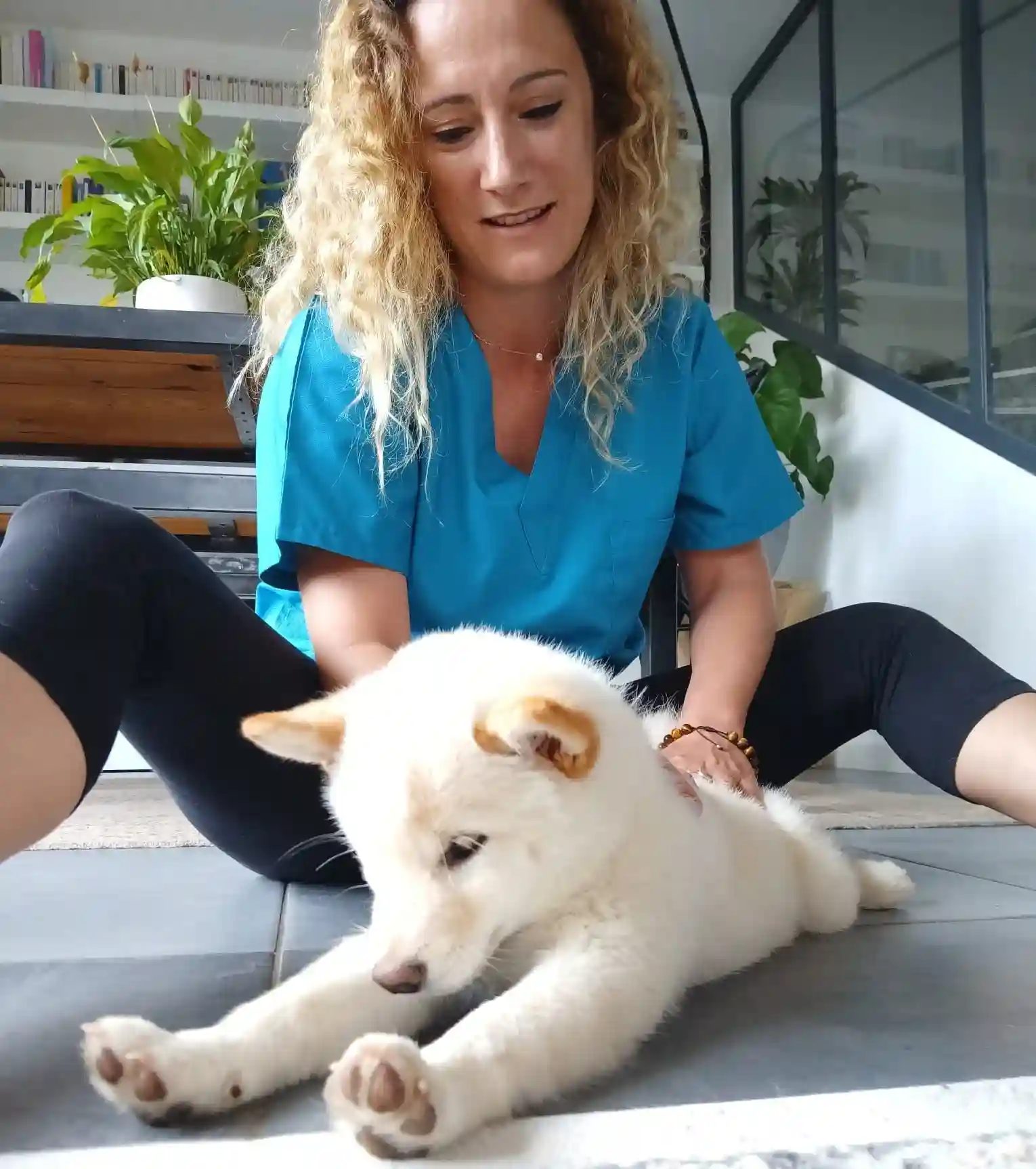
Dr. Emmanuelle SAGOLS
A graduate of the Toulouse Veterinary School, I discovered osteopathy a few years ago following a fall as I stepped out of the shower. I was completely locked up, and I was prescribed anti-inflammatories “to wait it out.” After several days with no improvement, a friend recommended I see an osteopath. I didn’t really know what to expect, and it turned out to be a real revelation, a new approach to care that treats the cause rather than the symptom.
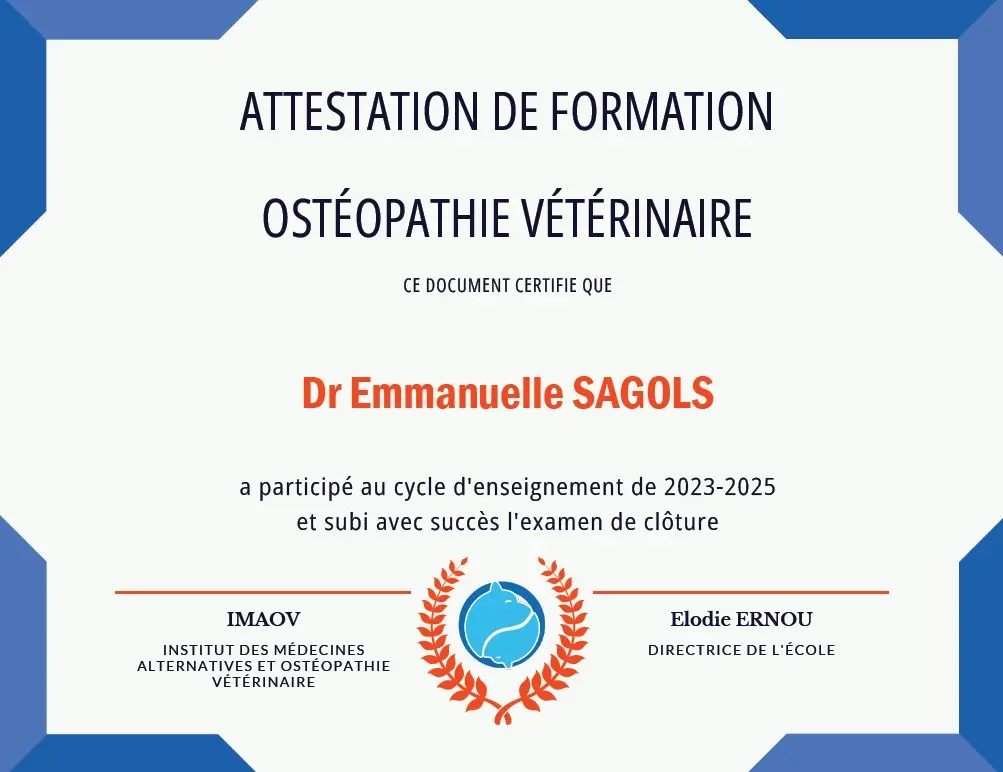
That experience led me to train, in 2023, at the Institut des Médecines Alternatives et Ostéopathie Vétérinaire, so I could bring the benefits of this gentle medicine to animals.
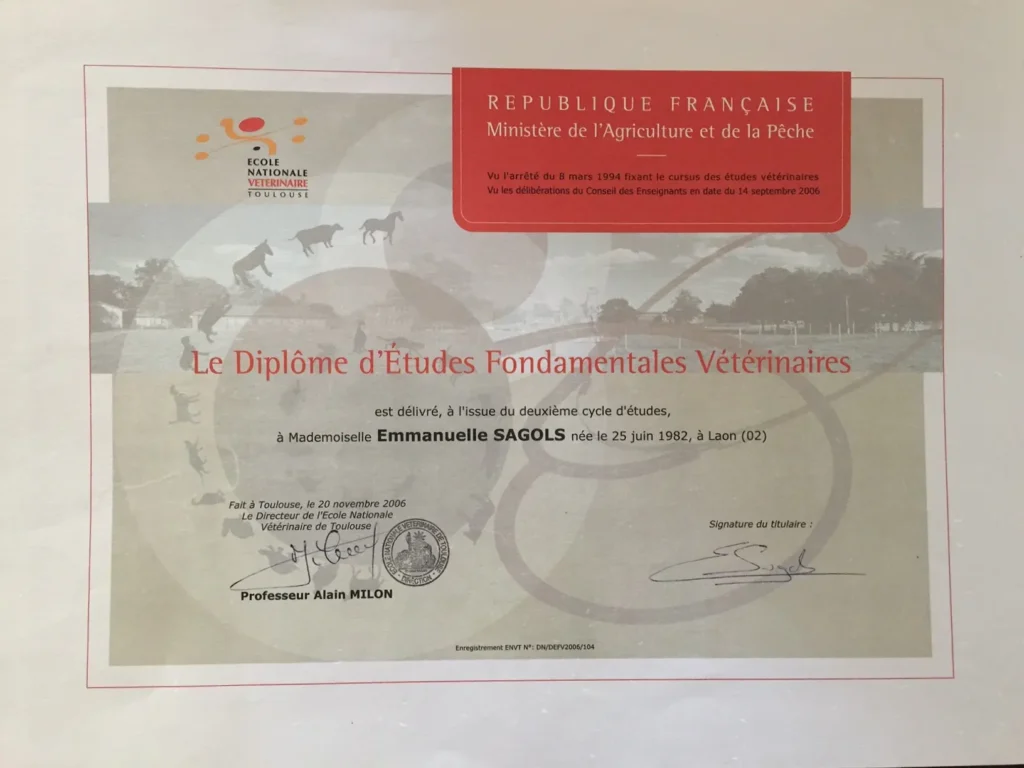
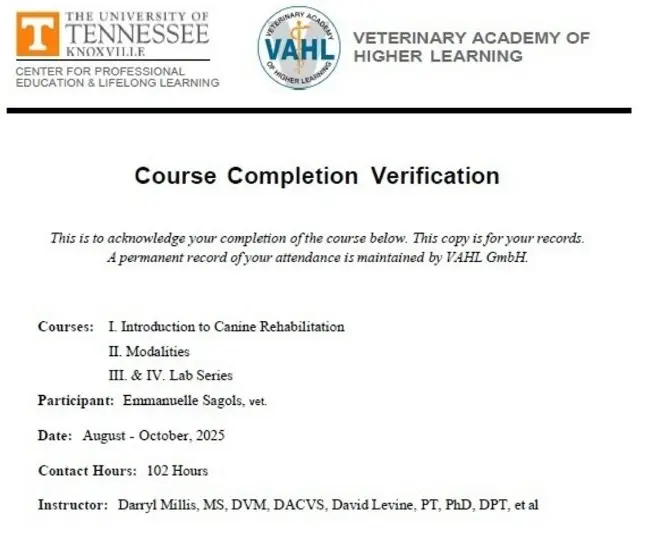
Rehabilitation and acupuncture quickly became essential complements to this work. I therefore completed the Certificate of Canine Rehabilitation Practitioner program at the University of Tennessee, as well as acupuncture training at the Ecole Nationale Vétérinaire de Toulouse.
My Care Philosophy
My practice is built on the complementarity of these disciplines: rehabilitation maintains, over time, the balance that osteopathy and acupuncture restore.
Member of the Cap Douleur network.
Spoken languages: French, English.


 Trustindex vérifie que la source originale de l'avis est Google.
 Trustindex vérifie que la source originale de l'avis est Google.
 Trustindex vérifie que la source originale de l'avis est Google.
 Trustindex vérifie que la source originale de l'avis est Google.
 Trustindex vérifie que la source originale de l'avis est Google.
 Trustindex vérifie que la source originale de l'avis est Google.
 Trustindex vérifie que la source originale de l'avis est Google.
 Trustindex vérifie que la source originale de l'avis est Google.
Questions fréquentes
Before your appointment, it’s completely normal to have a few questions. Let’s go over the most common ones together!
What is the difference between veterinary physiotherapy and osteopathy?
Osteopathy and rehabilitation are complementary approaches, not competing ones. Osteopathy releases restrictions in the joints, muscles and visceral structures through targeted manual techniques: it addresses the cause of the loss of mobility. Rehabilitation (also called physiotherapy ) consolidates that result over time, using massage, joint mobilisations, active exercises and equipment such as laser or electrotherapy.
In practice: osteopathy restores balance, physiotherapy stabilises it and strengthens the body over the long term. During the initial assessment, I determine which one your animal needs first — and it is not unusual for both to be combined.
Do I need a referral from my own vet?
No, you can contact me directly. As a qualified veterinary surgeon (École Vétérinaire de Toulouse), I carry out the orthopaedic and neurological examination myself before any treatment.
That said, I work alongside your regular vet, not instead of them: these disciplines replace neither surgery nor medical treatment. Do bring along any surgical reports, X-rays or recent test results, they guide the treatment plan precisely. With your consent, I am happy to send a written report to your vet.
My pet has just had surgery. When should rehabilitation start?
As early as possible, within the days following the procedure. Waiting until your animal “feels better” means losing ground: an unused muscle loses around 0.5 % of its mass per day — close to a third within five weeks — and the joint stiffens just as quickly.
Starting early does not mean exercising early. The first few days are devoted to relieving pain and preserving what is already there: cryotherapy, laser, massage and very gentle passive mobilisations. Next comes gradual reloading of the limb, and only then active strengthening exercises.
How it works in practice
- Phase 1, the first few days — relieve. Cryotherapy over the surgical site, laser for inflammation and healing, massage away from the wound, very gentle passive mobilisations. No effort is asked of your animal.
- Phase 2 — restore weight-bearing. Gradual reloading of the limb, postural work, short balance exercises. It is weight-bearing that rebuilds muscle and remineralises bone.
- Phase 3 — rebuild. Active exercises, strengthening, coordination, then a return to normal or sporting activity.
After cruciate ligament surgery, a slipped disc or a fracture, do get in touch without delay.
How much does a session cost, and is it covered by pet insurance?
An initial physiotherapy or osteopathy/acupuncture consultation lasts 45 minutes and costs €90 for a dog, cat or exotic pet, and €110 for a horse, excluding travel fees. Follow-up consultations of 30 minutes are €75, with packages of 5 sessions at −10 %. Full details are on the Contact and appointment page.
As for insurance: many pet health policies cover all or part of complementary therapies, often through an annual wellness allowance. Conditions vary considerably between insurers, so do check your policy. I always provide an itemised invoice for you to submit.
Which areas do you cover?
I travel to Le Crès, Jacou, Teyran, Castries, Castelnau-le-Lez, Vendargues, Baillargues, Saint-Aunès, Mauguio, Lattes, Mudaison, Candillargues, Lansargues, Saint-Brès, Valergues and Lunel. Travel fees vary by zone (see Contact and appointment page). For a town not listed here, ask me for a quote.